
 by
by 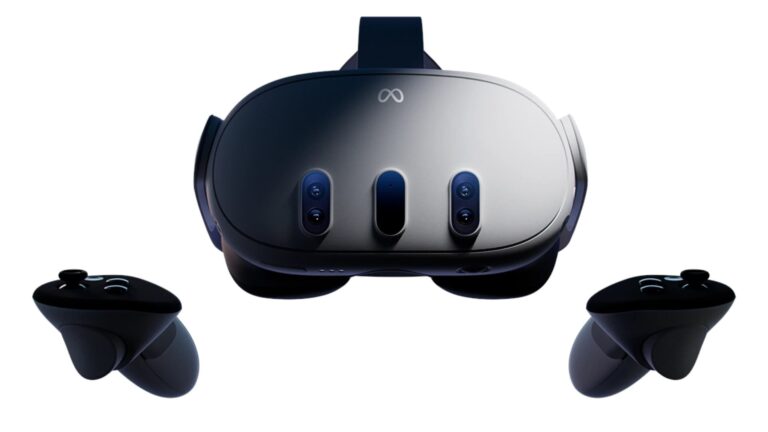
As we roll into 2026, it’s time for our annual ritual of synthesizing the lessons from the past twelve months and formulating the outlook for the next twelve. 2025 was an action-packed year for spatial computing, which continues a gradual uphill ascent toward mainstream traction.
2025 highlights include XR’s ongoing convergence with AI, inflections in non-display AI glasses, the rise of video display glasses, and the unveiling of the long-awaited Meta Ray-Ban Display glasses. Meanwhile, roadmap signals emerged from players ranging from Snap to Apple.
All these approaches – video passthrough AR, optical seethrough AR, and non-display smartglasses – represent form-factor divergence and diversification. That’s a good thing, as XR should include varied formats that are purpose-built and use-case-driven – a key trend in 2025.
Breaking it all down, what were the biggest lessons in 2025? Our research arm ARtillery Intelligence recently tackled this question in its report Spatial Computing: 2025 Lessons, 2026 Outlook. After publishing 2026 predictions here on AR Insider, we shift gears to 2025 lessons.
We’ll break them down weekly, continuing here with #5: VR < AR… But it isn’t Dead
Lesson 1: XR Devices Diverge & Diversify
Lesson 2: Practice the Art of the Possible
Lesson 3: AR’s Future is Intelligent & Utilitarian
Lesson 4: Communications is the Killer App
Lesson 5: VR < AR… But it Isn’t Dead
Ups & Downs
One thing clear from Meta’s quarterly earnings throughout 2025 is that AR is outpacing VR in consumer markets. Specifically, Ray-Ban Meta Smartglasses (RBMS) are growing rapidly while Quest 3 and 3s sales are flat or down year-over-year. The latter offsets the former.
This is a drum we’ve been beating for the past decade: AR’s potential all-day use case makes it more scalable and mass-market friendly than VR’s higher immersion – but lower frequency – use case. And the latest flavor of AR to resonate involves a toned-down (or non-existent) visual UX.
All of that said, it’s important to note that VR isn’t dead, as it’s often characterized in headlines and hot takes in the tech press. As we often joke, VR is the Rodney Dangerfield of tech: Can’t get no respect. But before we start feeling bad for VR, it may have itself to blame for underdelivering.
We say that because VR has fallen short of its revolutionary promises and proclamations made in its circa-2017 and 2021 (metaverse) hype cycles. By hyping it so superlatively, VR proponents set a high bar and a narrow set of possibilities: blow everyone’s minds or disappoint.
Cultural Icon
But the effects of that hubris aside, the fact is that VR isn’t doing that badly. There are some declines to point to, but also some strong metrics. Among those are Gorilla Tag’s recent one-million daily active user milestone and an aggregate VR installed base of about 27 million units.
To further put VR’s success into perspective, we can compare it to historical products. The N64 sold about 30 million lifetime units – just a few million more than VR’s installed base – and that was a cultural icon. A similar ~30 million marked the first two years of iPhone sales.
Speaking of the iPhone, time and mobile hardware have shifted our perspective on what defines product success. The smartphone has reframed the definition of ubiquity to mean billions of units. Few product classes come anywhere close to that, and everything looks small next to it.
The bottom line is that VR isn’t the media darling it once was, but it’s moving forward. It likely won’t reach iPhone scale, but could be more like AV receivers and DSLRs – venerable products in their own right, and nothing to be ashamed of once cultural expectations are reset.