
 by
by 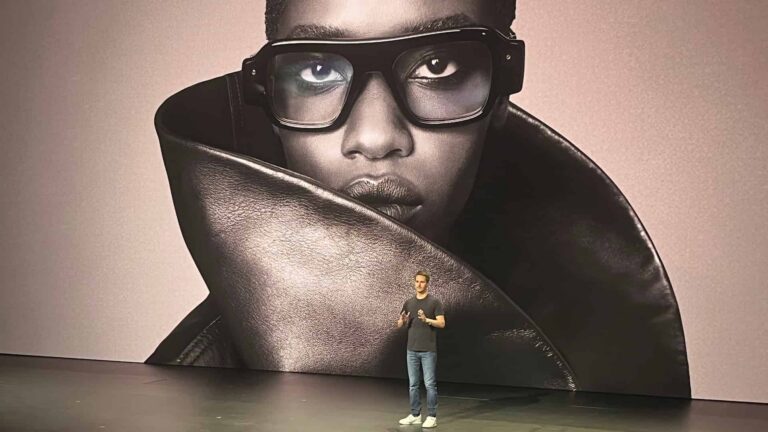
After being announced and previewed in June at the AWE conference, Snap Specs officially launched today in Los Angeles. We were at the launch event and got a hands-on demo from the Specs team, which we’ll document and detail in a separate article.
As for the launch itself, we already knew most of the device’s details – Specs’ specs, if you will – and got to interview the Specs team onstage at AWE. But today’s festivities revealed some new elements, and exposed some of the Specs use cases being cultivated (more on those in a bit).
But the big reveal was Specs Intelligence – a framework that brings AI capabilities to Specs, enabling smart agents for faceworn ambient computing. Snap is calling this an ‘anticipatory AI service,’ meaning that it will proactively and predictively guide you through various life tasks.
For example, Specs Intelligence will do things like identify objects, route you to destinations, alert you to key details about your upcoming flight, and other functions determined by the apps you choose to connect it to. That makes the possibilties for Specs Intelligence rather expansive.
To inspire these ‘intuitive computing’ moments, as Evan Spiegel called it, anyone can use Specs Intelligence on macOS and iOS. There, it offers AI functions even if you don’t own Specs. This is smart to get the app out there and whet appetites for the full-fat Specs experience.
Hit the Ground Running
Back to all those Specs use cases Snap is cutlivating, they span entertainment, education, work, shopping, translation, navigation, fitness, and shared experiences. Fleshing these out is a smart move from Snap, as any device is defined by the things you do on it.
And this is one of Specs’ biggest but seldom-discussed advantages. Because Snap has a robust lens developer community – cultivated in 10+ years of mobile lenses and 3+ years of faceworn lenses – Specs hit the ground running with dozens of experiences. And that list will grow.
To that end, here are a few highlights we extracted.
Entertainment
The SPECS browser enables streaming from YouTube, HBO Max, and more on a virtual display that feels like a 115-inch cinema screen placed about 10 feet away. This is a popular use case and a market that has been validated by the likes of Xreal and Viture. Snap has also announced several content partnerships with HBO, the NBA and others.
Social Connection
Connected Lenses enable spatial anchoring so that two users can see and share virtual experiences that are synchronized. The first Connected Lenses are already developed, including Dominoes with Jimmy Butler, Chess and Table Tennis. Using the Snapchat app – a natural choice – users can do things like take a Snap by snapping their fingers, or start a hands-free video call and share what they see.
Productivity
Specs can pair with your mobile device via Bluetooth then take calls and show notifications. The device can also transform any space into an immersive, flexible workspace, connecting to one’s PC and expanding its display, or connecting to peripherals like keyboards. The Whiteboard function lets users brainstorm, organize workflows, and create diagrams.
Utilities
Practical lenses like Translation let users translate someone speaking a foreign language in real-time and display subtitles in the field of view, with support for 60 different languages (we tried this, and it actually works). The Navigation lens lets users speak a destination and be visually guided to it. Tripadvisor for SPECS lets users find nearby points of interest and get recommendations.
Shopping
Through an integration with Shopify, users can browse products in 3D and place them at full scale in their space. More such integrations will likely follow, given the robust ecosystem of existing platforms, standards, and 3D models/assets for viewing and virtually trying on products.
Enterprise Productivity
Market departures from Microsoft HoloLens and Magic Leap 2 leave a massive opportunity gap for enterprise AR, such as visual guidance. Specs meanwhile have all the ingredients for an enterprise AR device, including fully immersive AR in a standalone (non-tethered) form factor.
Though positioned as a consumer device, enterprise may be a compelling wild card for Specs. And Snap has already gotten started with the necessary business development. It’s working with Salesforce, Amazon Web Services (AWS), NVIDIA, Trifork, Hololight, and others.
Stay Tuned
As noted, we got a hands-on demo and will have that fully fleshed out shortly. As a teaser for that narrative, we’ll say that Specs offer a compelling UX that will be valued in several consumer and enterprise contexts. The latter, again, could be a sleeping giant for Specs.
One of the device’s hallmarks is the fact that it offers fully-immersive and world-interactive AR, not flat/floating graphics, or audible-only outputs. It’s the only consumer XR device that offers that in an optical see-through (OST) and standalone vessel (no tether or compute puck).
In that standalone and world-immersive orientation, Specs offer natural interactions using your hands and voice, and have an overall intuitive and pleasing UX. Specs’ design decision towards OST also carries Snap’s social DNA by enabling situational presence and eye contact.
More to come in our full review. Snap will also offer public demos starting October 1 at the Westfield Century City in L.A.. This will be a smart move, as selling AR glasses online is like “selling TVs on the radio.” This first push could be a sign of a bigger retail presence to come.